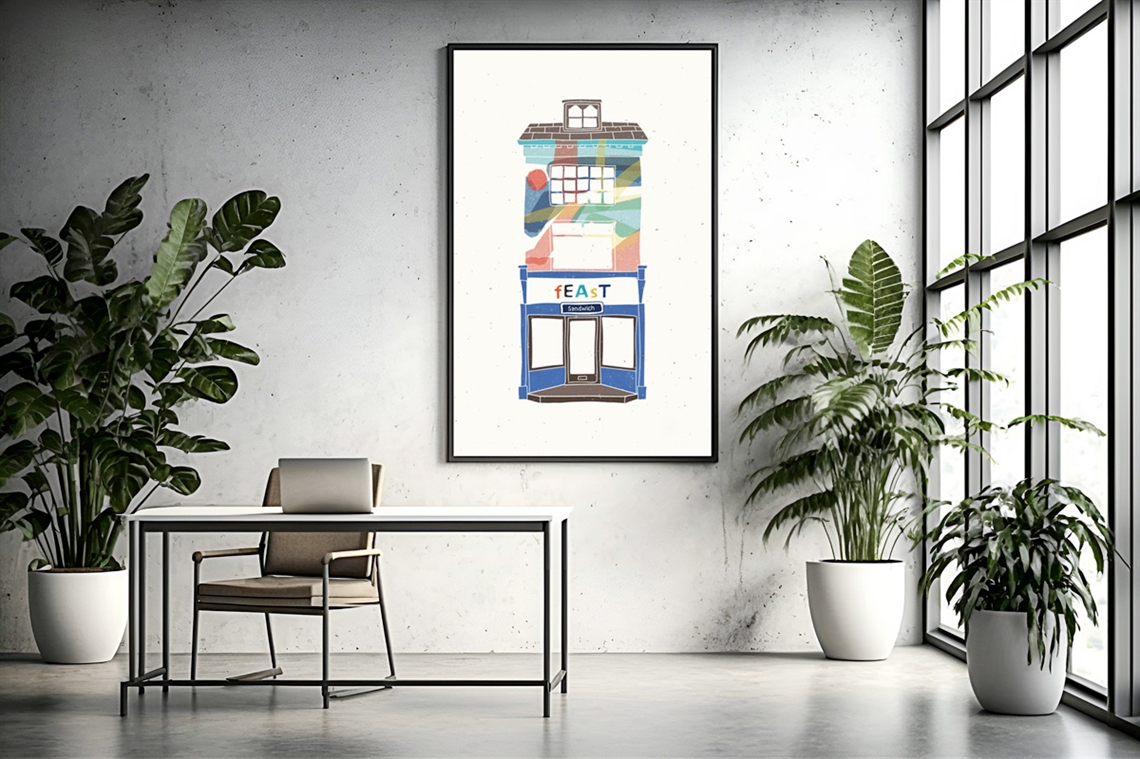
A guide to the printing techniques used to reproduce and display artwork.
When looking to sell or display your work, navigating the different types of printing can be confusing. Here is a brief explanation of the main print types commonly used by artists today:
Giclée Prints: This is the gold standard for fine artists, painters, illustrators, and photographers. Giclée printing involves using a highly calibrated, high-resolution inkjet printer (like our Epson SureColour systems) to spray microscopic dots of pigment-based ink onto professional archival art papers. This process achieves a stunning colour gamut, flawless detail, and museum-quality longevity.
Standard Photographic Prints: Traditional photo prints (often produced in high-street labs) use dye-based inks and resin-coated papers. While cost-effective for everyday snaps, they lack the longevity, depth, and texture of a Giclée print. At Indigo Giclée, our professional photographic prints are produced using the Giclée method on specialised photo papers (like Baryta) to ensure gallery-quality results.
Lithographs / Offset Litho: Invented at the end of the 18th century, this involves making plates which are coated in ink and pressed onto paper. It is highly cost-effective for very large print runs (like magazines, posters, or brochures) but is not typically used for high-end limited edition art prints. (If you need commercial litho printing, our sister company Indigo Ross can help!)
Digital Printing: This encompasses a whole range of fast-turnaround commercial printing (flyers, business cards, booklets). While modern digital printing is excellent for marketing materials, it does not use the archival pigment inks or fine art papers required for museum-grade art reproduction.
Screen Prints: Also known as silk-screen printing, this is a manual technique where ink is pushed through a fine mesh stencil onto the paper. It is highly tactile and often used by contemporary and street artists who want a bold, hand-made feel to their editions.
Etchings: A traditional printmaking process where a design is hand-etched into a metal plate, inked, and pressed onto paper. It produces a very organic, classic feel, though it is a labour-intensive, manual process rather than a reproduction technique.